• Hours

    8:30am – 3:00pm
    Monday – Friday

  • Extended

    7:30am – 5:30pm
    Monday – Friday

  • Break Care

    8:00am – 5:00pm
    Spring & Winter breaks

We Expand Perspective and Grow Autonomy

At Sunstone Montessori, we recognize children’s growing capacity to think abstractly, question assumptions, and understand the relationships between people, ideas, and systems. Through research, sustained projects, problem-solving, and collaboration, students move beyond discovering information to evaluating it, making connections, and developing their own informed perspectives.
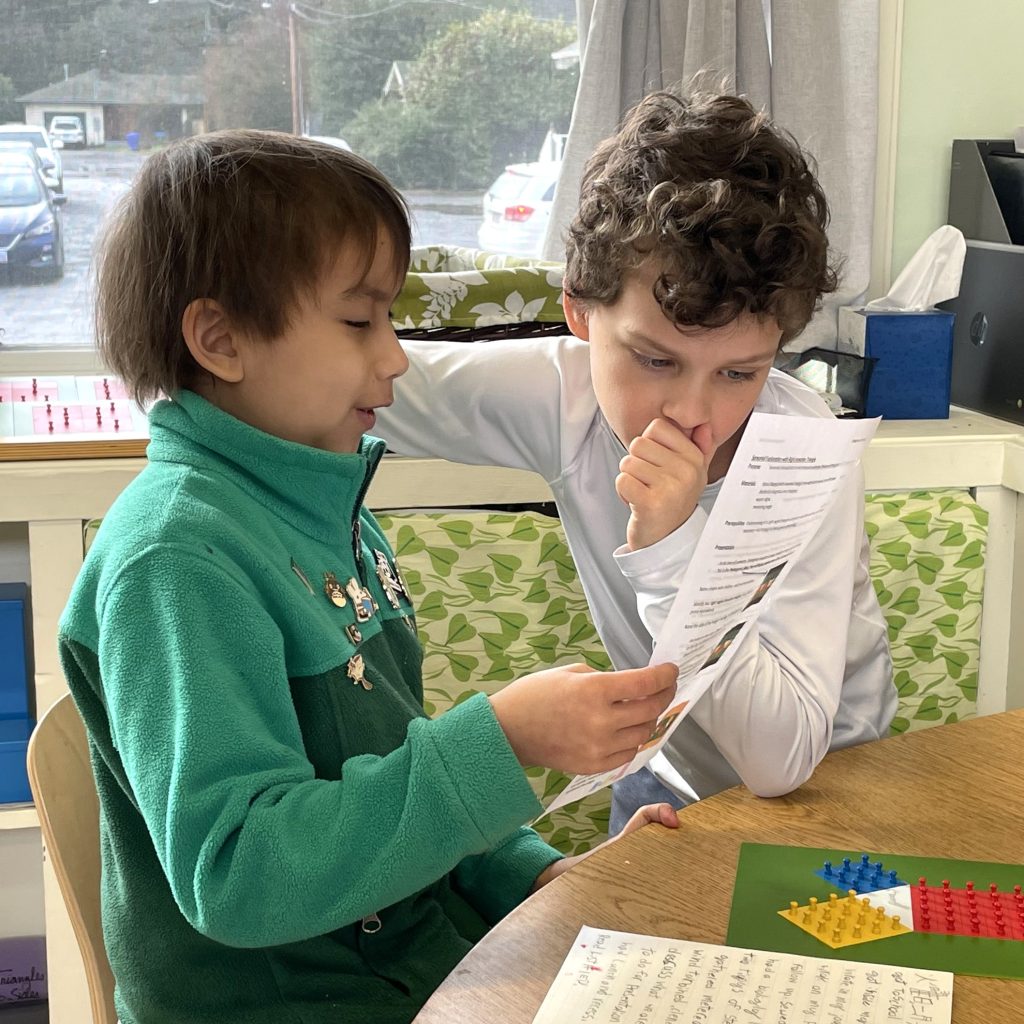
Two students work collaboratively exploring Pythagoras Theorem

In our classrooms students:

expand perspective

by exploring different viewpoints, cultures, histories, and interconnected systems.

think critically

by asking questions, evaluating information, and supporting ideas with evidence.

deepen academic understanding

through research, abstract reasoning, and interdisciplinary work.

Three students perform a scientific exploration of chemical reaction

grow autonomy

by planning, prioritizing, and managing longer-term assignments.

strengthen problem-solving

through investigation, experimentation, and thoughtful revision.

practice collaboration and leadership

by contributing ideas, sharing responsibility, and working through differences.
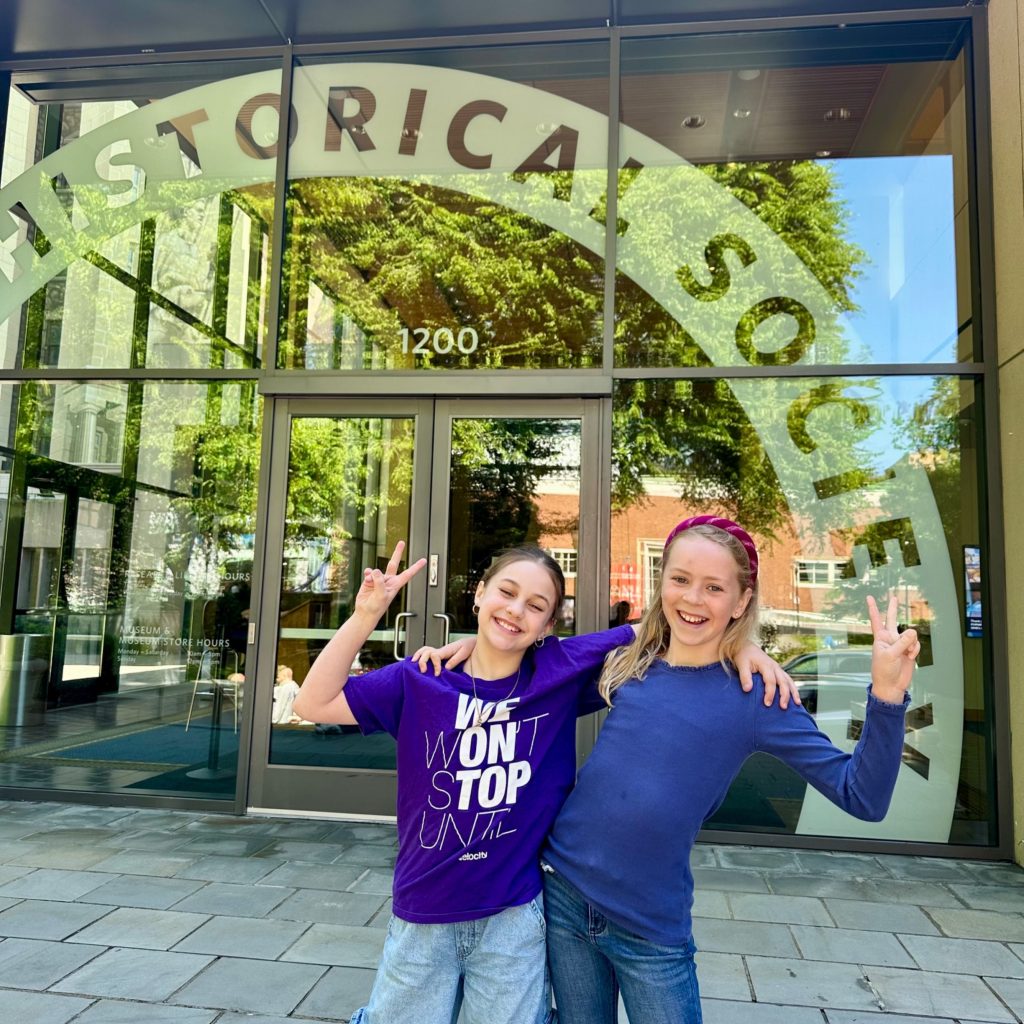
Two students plan a trip to the oregon historical society to interview an expert and further their research

develop accountability

by reflecting on their progress and following through on commitments.

prepare for adolescence

with stronger judgement, self-awareness, and confidence in their ability to navigate complexity.
  • Two students give thumbs-up beside a math work table and a world map
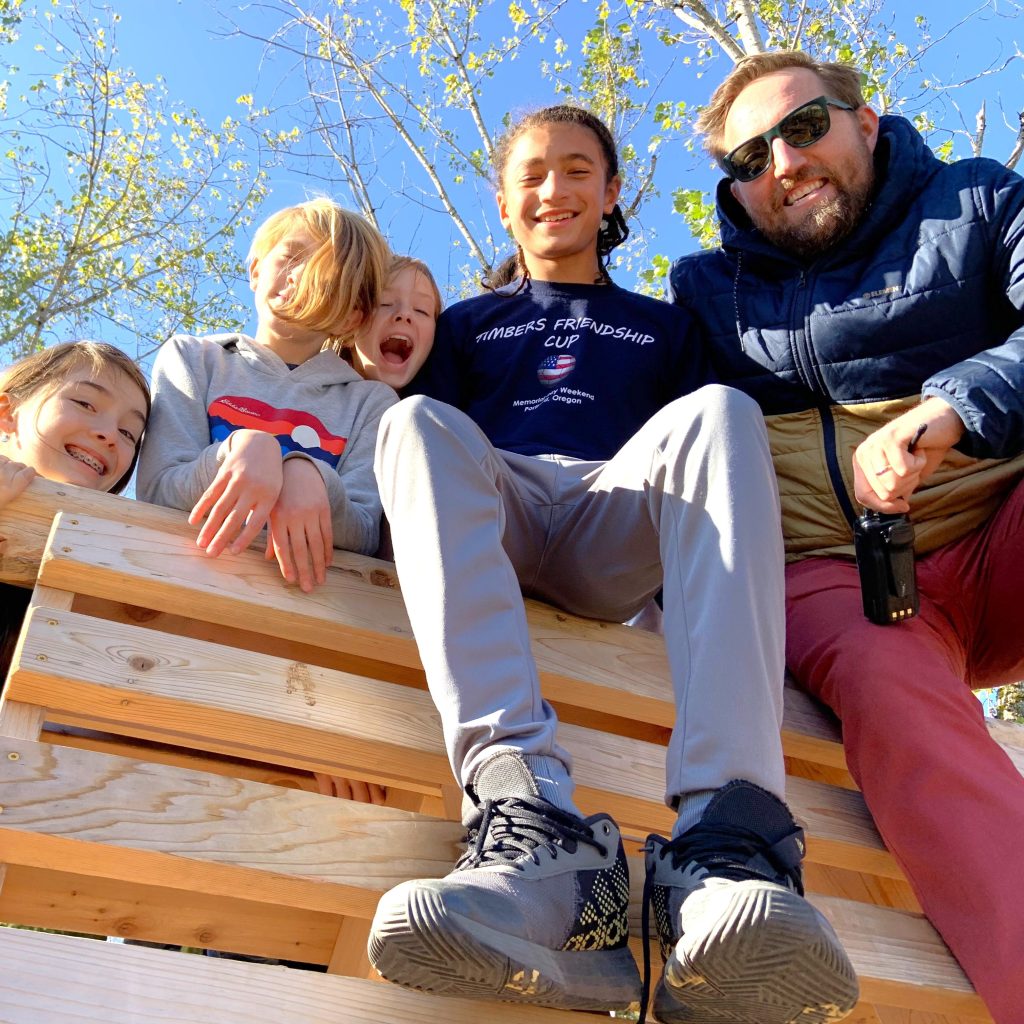
  • Students and a teacher sit together on wooden pallets outdoors
  • Two students explore acrylic painting as a form of artistic expression

Areas of Curriculum

  • Students move toward increasingly abstract mathematical thinking while developing conceptual understanding, reasoning, problem-solving, and confidence with complex ideas.

    Students deepen their understanding of numbers, patterns, relationships, and mathematical concepts as they move confidently between concrete and abstract thinking.

    They explore fractions, decimals, percents, ratios, geometry, algebra, and other increasingly complex concepts while developing the flexibility to approach problems in multiple ways.

    Through problem-solving, investigation, and real-world application, students learn to recognize how mathematics helps us make sense of the world around us.

    They build both the skills and confidence to tackle complex ideas with creativity, curiosity, and persistence, developing an appreciation for the possibilities mathematics offers.

  • Students deepen their understanding of language as both a tool for communication and a way to explore ideas, perspectives, and their own developing sense of self.

    Through reading, writing, grammar, vocabulary, research, and communication skills students develop their own voice and learn to engage critically with texts and ideas.

    They engage with increasingly complex literature and texts, strengthening their reading comprehension, analysis, vocabulary, grammar, and appreciation for the history and richness of written and spoken language.

    Through writing across a variety of genres, students learn to draft, revise, and communicate their ideas with clarity, confidence, and purpose.

    As they develop their own voice, they learn to express their thoughts and values with authenticity while listening to and engaging thoughtfully with the ideas of others.

  • Students investigate increasingly complex scientific concepts through experimentation, research, observation, and interdisciplinary connections.

    Students explore the living and nonliving systems that shape our world, developing a deeper understanding of how they are structured, classified, and interconnected.

    Through observation, experimentation, research, and hands-on study, they explore topics ranging from astronomy, geology, chemistry, physics, and climate to botany, zoology, ecology, and the human body.

    As students recognize patterns and relationships across the natural world, they develop a growing appreciation for the complexity and diversity of life.

    They also begin to consider humanity’s unique place within these systems and the ways our choices shape the world we share, laying a foundation for thoughtful inquiry, ethical awareness, and responsible stewardship.

  • Students explore history, geography, cultures, civics, and human development while considering multiple perspectives and the interconnectedness of human experience.

    From the formation of the Earth and the evolution of life to the development of human societies and civilizations, students delve into the story of our world and the people who have shaped it.

    Through geography, history, and cultural studies, they investigate how people have lived, adapted, migrated, created communities, and responded to their fundamental needs across time and place.

    Students consider both the experiences that make cultures unique and the universal needs that connect us all.

    By studying the past and engaging with diverse perspectives, they develop a deeper understanding of the world they inhabit and a thoughtful appreciation for the complexity, creativity, and interconnectedness of human experience.

  • Students develop emotional intelligence, self-regulation, collaboration, and the ability to reflect on their own thinking, choices, and growth resulting in a deeper understanding of themselves as learners, community members, and individuals.

    Through reflection, daily planning, teacher check-ins, and regular conversations about their progress, interests, relationships, and challenges, they learn to recognize what helps them concentrate, manage their time, organize their work, and persevere.

    Students strengthen their ability to collaborate, navigate conflict, express their needs, appreciate different perspectives, and contribute thoughtfully to their community.

    As they gain greater awareness of their strengths, learning needs, and personal strategies for success, they become increasingly confident in making choices that honor themselves and those around them.

  • Students deepen their creative skills and artistic voice through visual art, music, and theater, exploring both the techniques and the history that give each discipline its depth.

    They work with a variety of media and materials, study elements such as color, composition, rhythm, and perspective, and develop greater skill and intention in their creative work.

    Through music and performance, students strengthen their ability to listen, communicate, collaborate, and express themselves with confidence.

    Whether creating a painting, composing music, designing a set, or stepping onto a stage, students experience the arts as meaningful forms of expression and as sources of inspiration that enrich how they understand and engage with the world.

  • Students develop physical confidence, coordination, strength, and endurance through a wide range of movement experiences, including games, sports, dance, yoga, climbing, running, and outdoor exploration.

    Movement is also woven into the school day, giving students opportunities to connect physical activity with learning, problem-solving, and community.

    Through cooperative games and team sports, students practice communication, collaboration, sportsmanship, and navigating both success and challenge.

    They are encouraged to set personal goals, recognize their own growth, and discover strategies that help them persevere.

    These experiences foster a positive relationship with movement, the outdoors, and their own well-being, building healthy habits and confidence that can last a lifetime.

  • Students develop Spanish language skills through conversation, cultural exploration, and meaningful opportunities to communicate.

    As they build vocabulary and confidence, they deepen their understanding of language and culture while developing an appreciation for different perspectives and ways of connecting with the world.

    Students build confidence in Spanish through listening, speaking, reading, writing, and interactive language experiences.

    They expand their vocabulary, strengthen their understanding of grammar, and use Spanish in conversations, stories, songs, role-play, and other meaningful activities.

    Through the study of Spanish-speaking countries, including their geography, history, customs, and traditions, students develop a deeper understanding of the many cultures and perspectives that make up the Spanish-speaking world.

    As they grow their language skills and cultural knowledge, students develop an appreciation for the richness of multilingual communities and greater confidence connecting with others across languages and cultures.

  • Learning extends beyond the classroom through Going Outs, Science Camp, and the sixth-year Capstone Trip, giving students meaningful opportunities to follow their questions and apply their knowledge in the wider community and natural world.

    They navigate new environments, conduct research, collaborate, solve problems, and experience firsthand how their learning connects to real people, places, and questions.

    Going Outs are student-initiated extensions of classroom learning. When students reach the limits of the resources available to them at school, they look to the wider community for what they need to continue their work. This might mean visiting a specific location, gathering materials, conducting research, or interviewing an expert. Students plan and carry out these outings, developing organization, navigation, communication, problem-solving, and the confidence to seek out information and resources for themselves.

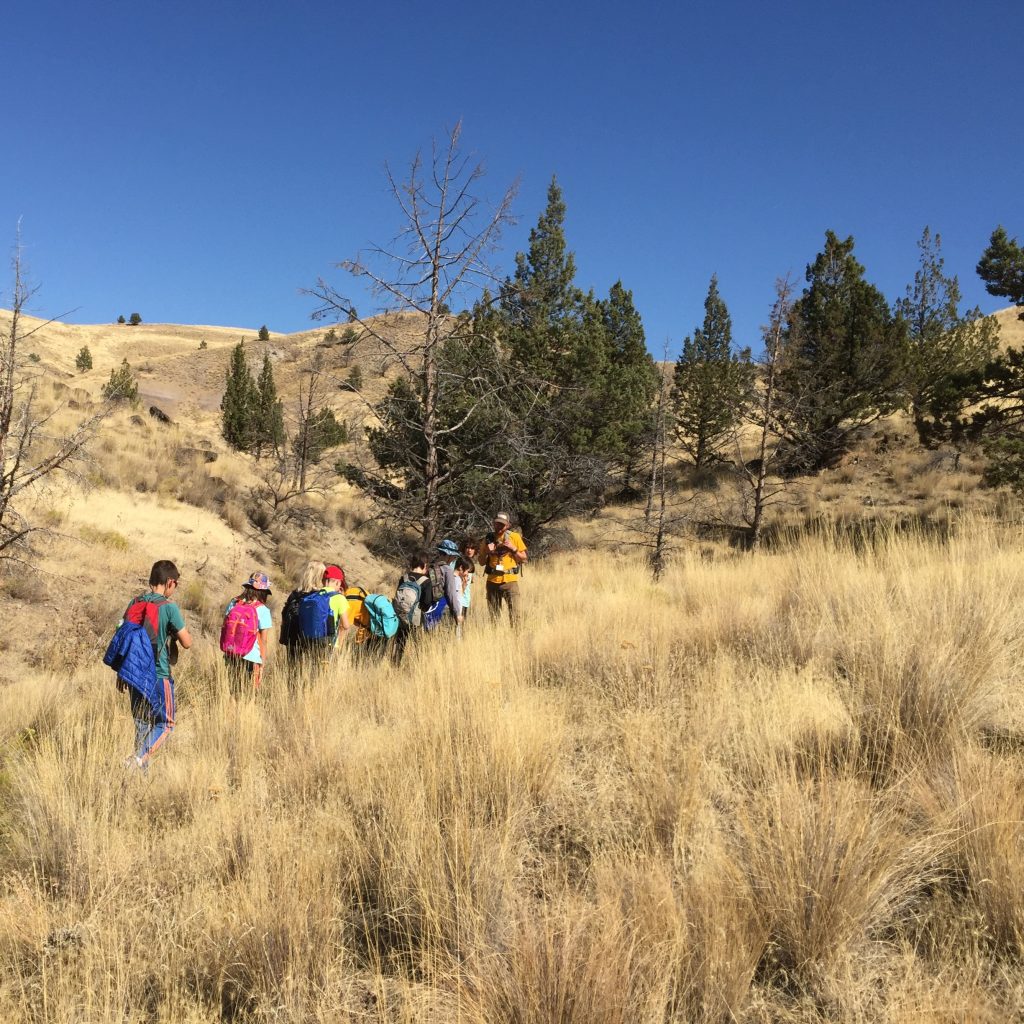
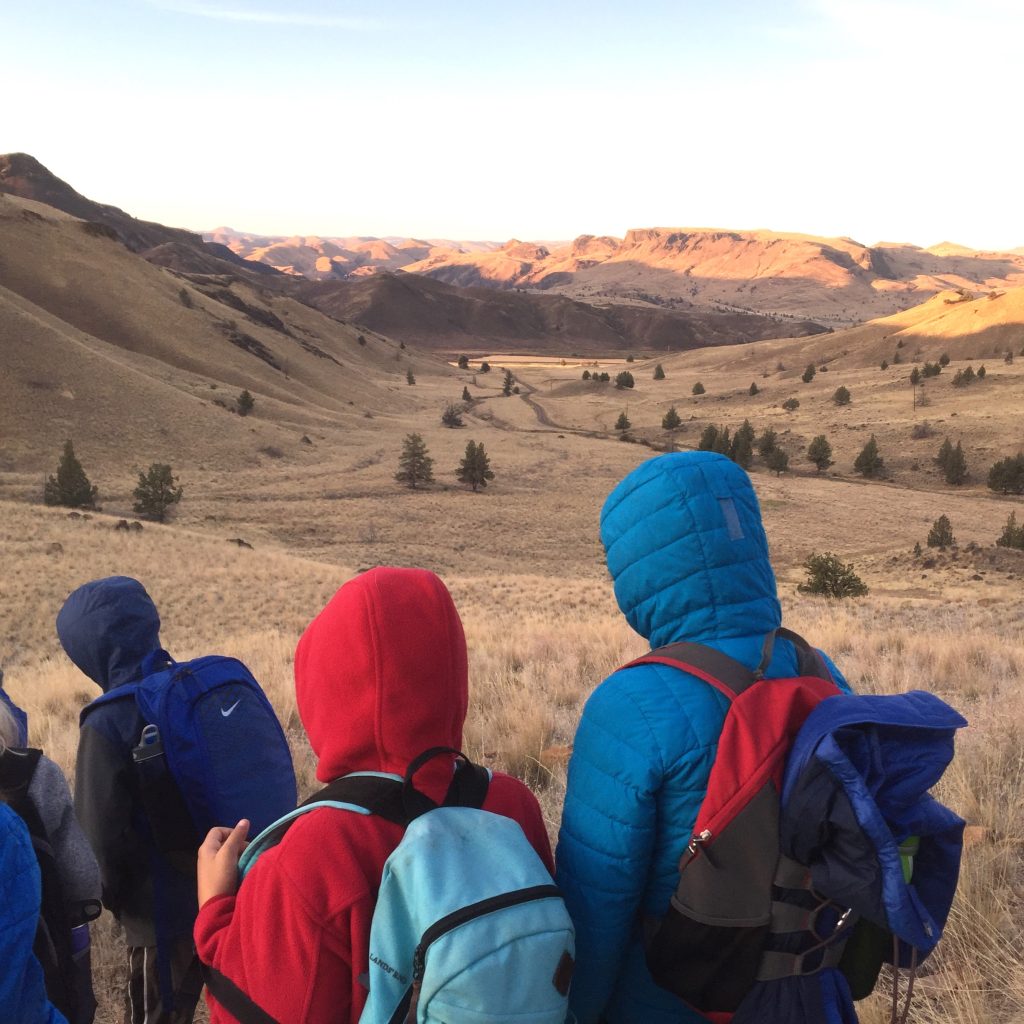
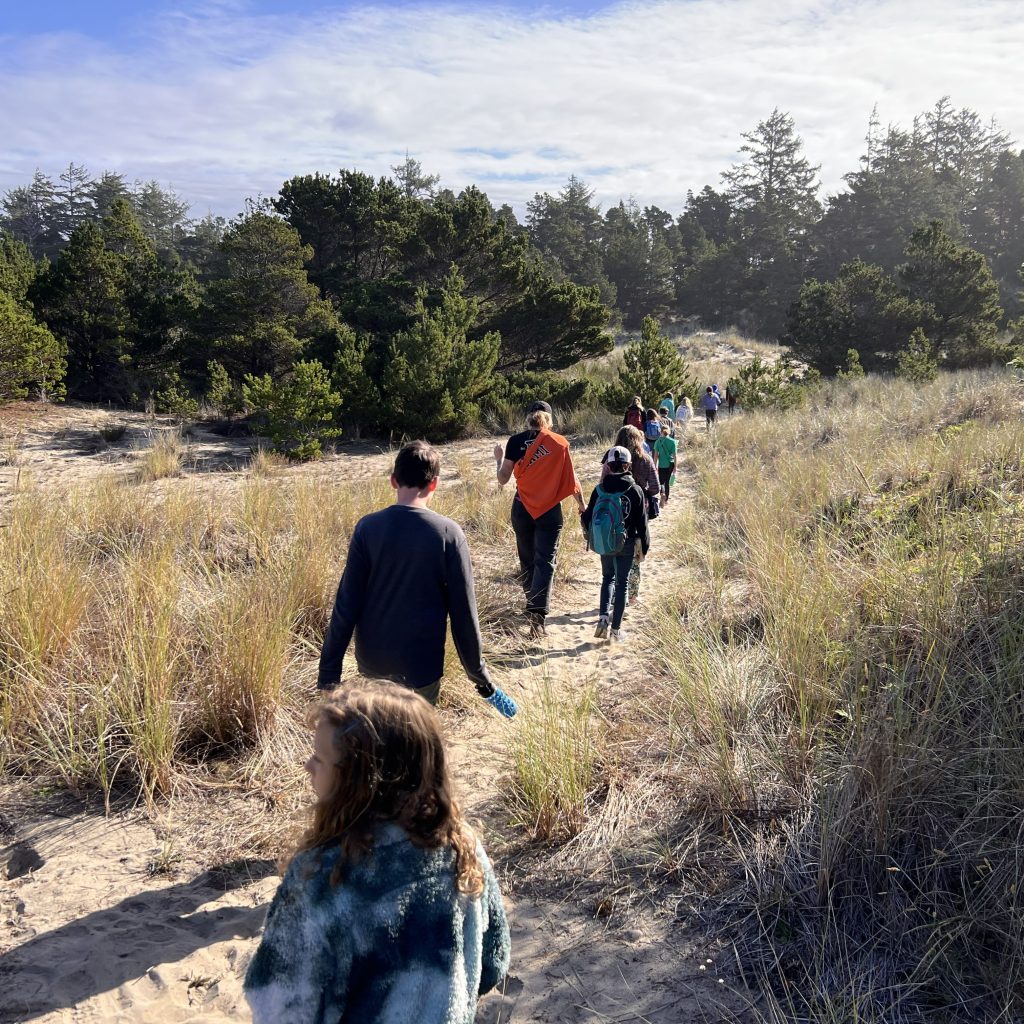
    Science Camp takes learning into the beautiful landscapes of the Pacific Northwest through four-day, three-night excursions focused on hands-on science and environmental learning. Through hiking, observation, exploration, and field study, students experience firsthand the natural systems and relationships they have explored in the classroom.

    The 6th Grade Capstone Trip brings together many of the skills they have developed throughout Upper Elementary. Students spend the year planning, organizing, and fundraising for their trip, coordinating events such as Pizza Fridays and Bingo Nights and creating and selling custom sweatshirts. They practice long-term planning, goal setting, organization, time management, budgeting, communication, collaboration, delegation, problem-solving, and follow-through as they work together toward a shared goal.

    These experiences help students see themselves as capable learners who can find information, navigate unfamiliar situations, work with others, and turn ideas into action. They carry these skills with them as they move into adolescence and beyond.

Areas of Growth & Development

  • Managing time and longer-term responsibilities
  • Planning and completing complex projects
  • Setting goals and monitoring progress
  • Increasing self-direction and initiative
  • Developing organizational systems
  • Reflecting on and adjusting learning strategies

  • Developing deeper self-awareness
  • Navigating increasingly complex relationships
  • Practicing empathy and perspective-taking
  • Resolving conflict with greater independence
  • Developing resilience and self-regulation
  • Building confidence and a strong sense of identity

  • Abstract and critical thinking
  • Independent research and inquiry
  • Making complex connections across disciplines
  • Metacognition and reflection
  • Problem-solving and intellectual persistence
  • Developing and defending ideas thoughtfully

  • Mentoring younger students
  • Taking leadership within the classroom
  • Collaborating toward shared goals
  • Practicing ethical decision-making
  • Contributing meaningfully to the wider community
  • Developing an understanding of fairness, responsibility, and service

Come see for yourself!

Tours run weekly.
45 minutes, parents only.

We look forward to sharing Sunstone with you!

  • Two students cook a meal as an extension of cultural heritage research
  • Students hike single file along a forested trail
  • Two students explore acrylic paint as a form of artistic expression
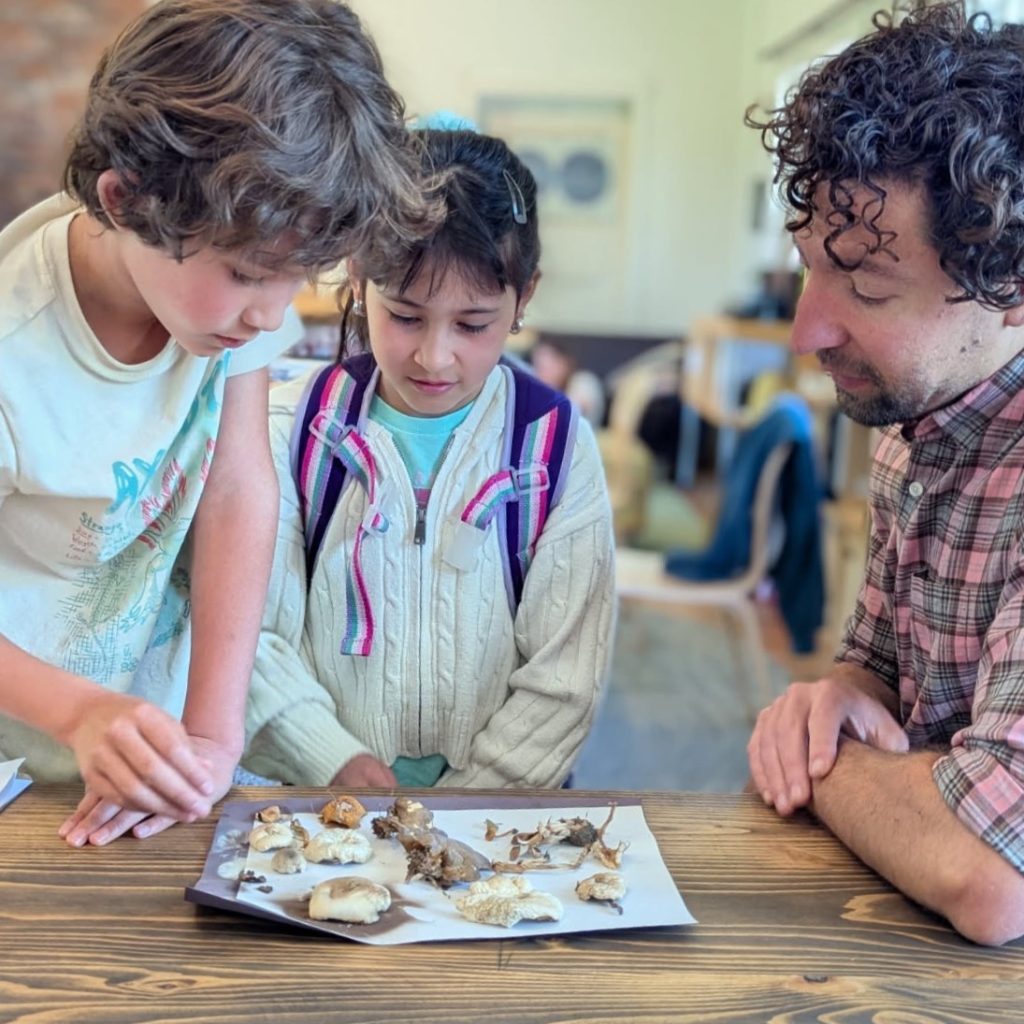
  • Two students identify mushrooms they collected from a research trip in the forest
  • Students find fossils on a hike in eastern Oregon as part of science camp
  • Students dissect squid and identify anatomy at OMSI science camp on the oregon coast
  • Students explore eastern Oregon landscape geology at science camp